.png)


If you have crowns or veneers and are considering in-office whitening, the most important thing to understand is this: whitening works on natural teeth, but it does not change the color of porcelain.
That does not automatically mean whitening is a bad idea. It depends on what you are trying to accomplish.
For some patients, in-office whitening can be a useful way to brighten natural teeth around existing dental work. For others, especially patients with crowns or veneers covering most of the visible front teeth, whitening may do very little for the overall smile. Before investing in treatment, it is worth understanding what whitening can and cannot do.
Professional whitening gel is designed to lighten natural tooth enamel and dentin. Crowns and veneers are different. They are typically made from porcelain or ceramic materials, and those materials do not bleach the way natural teeth do.
That means if you have a porcelain crown or veneer, its shade will stay the same after whitening.
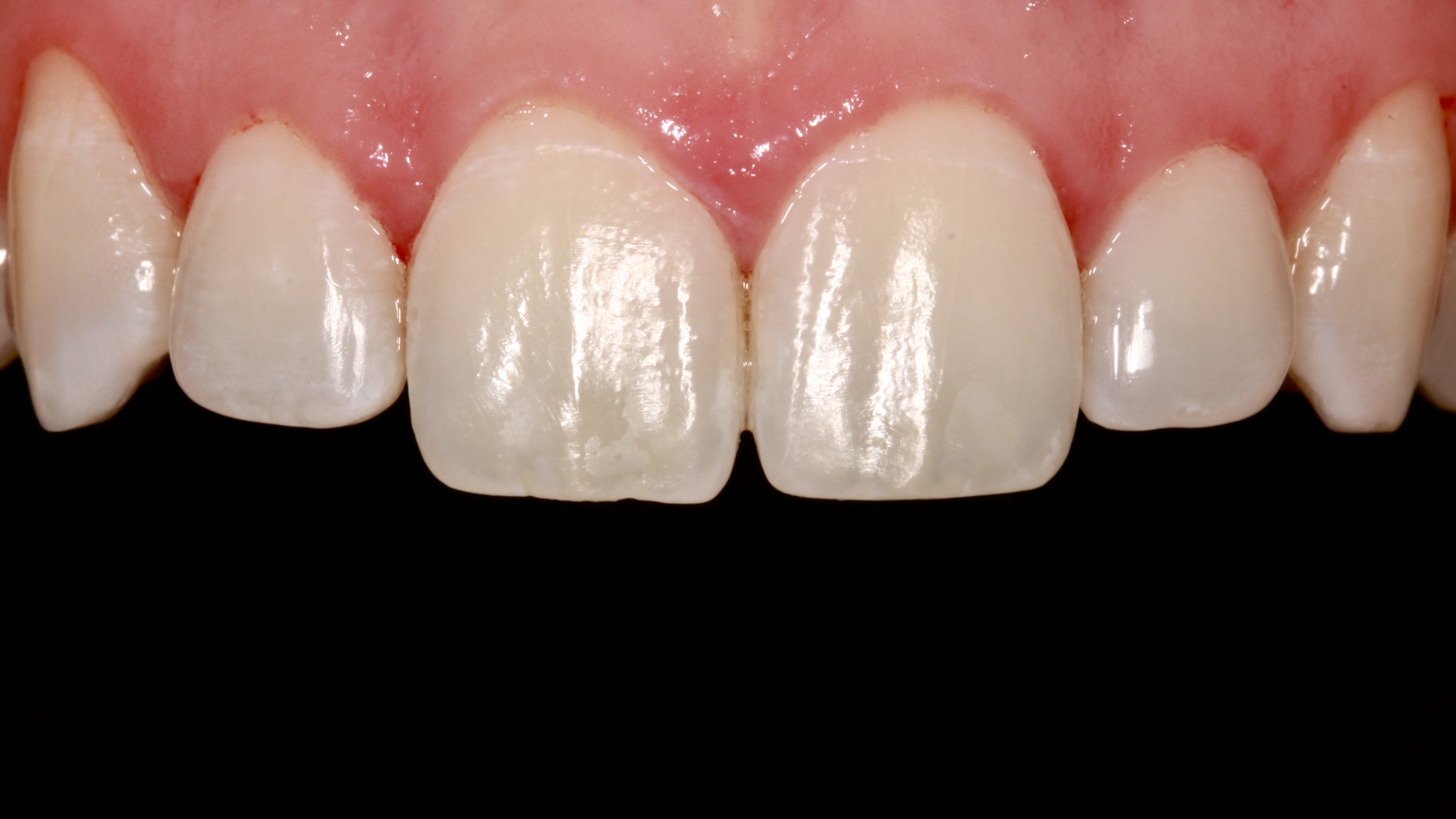
This matters most when your crowns or veneers are on the front teeth, because those are the teeth people see when you smile. If all of your visible front teeth are covered with crowns or veneers, in-office whitening may not make a noticeable difference in your smile. It may whiten the natural teeth farther back, but it will not brighten the porcelain that dominates the appearance of your smile.
In simple terms: whitening can change your natural teeth, but it cannot make porcelain crowns or veneers whiter.
There are situations where in-office whitening can be helpful even if you have some dental work.
For example, let’s say you have one or two front crowns that are lighter than the rest of your natural teeth. In that case, whitening may be used to bring the natural teeth closer to the shade of the crowns. The goal is not to whiten the crowns. The goal is to lighten the surrounding natural teeth so the overall smile looks more balanced.
This can be a smart option when the crowns or veneers are still in good shape and the only issue is that the natural teeth around them have darkened over time.
It can also be helpful if you are planning future cosmetic work. Sometimes whitening is done first so the patient and dentist can establish the desired shade before replacing older restorations. That way, any new crowns, veneers, or bonding can be matched to the brighter natural teeth.
Whitening around crowns or veneers requires more planning than simply whitening natural teeth.
One reason is that teeth temporarily dehydrate during whitening. When the whitening gel is removed, the teeth may appear lighter than they will look once they rehydrate and settle. This means the immediate shade after treatment is not always the final shade.
As the dentist in the transcript explained, you may need to aim a little lighter than the existing crowns at first, then allow the natural teeth to settle back down. That makes whitening around existing dental work something of a moving target.
This is why cosmetic judgment matters. The goal is not just “whiter.” The goal is a natural-looking match.
For patients who want subtle, refined results, this distinction is important. A good cosmetic result should blend with your face, your smile, and any existing dental work. It should not look patched together or unnaturally bright.
If you have a mouth full of veneers or crowns, whitening is usually not going to change much about the visible color of your smile.
That does not mean your dentist has no options. It simply means whitening may not be the right tool. If the porcelain itself is too dark, too opaque, too worn, or no longer matches your smile goals, the more appropriate conversation may be about replacing or updating the restorations.
This is especially true for older dental work. Crowns and veneers can remain structurally sound but look outdated in color, shape, or translucency. In those cases, whitening natural teeth around them may not solve the bigger aesthetic issue.
A trustworthy cosmetic dentist should tell you when whitening is likely to help and when it is probably not worth your money.
Before scheduling whitening, ask your dentist:
These questions help you avoid paying for a treatment that cannot accomplish what you want. They also help your dentist plan a result that looks intentional, not mismatched.
Yes, you can get in-office whitening if you have crowns or veneers. But the results depend entirely on where those restorations are and what you are hoping to change.
If you have natural teeth that are darker than your crowns or veneers, whitening may help create a better match. If your front teeth are mostly covered in porcelain, whitening will not significantly change the color of your smile because porcelain does not bleach.
The best next step is a cosmetic consultation before whitening. A dentist can evaluate your natural teeth, crowns, veneers, and overall smile shade, then recommend whether whitening is worthwhile or whether another option would give you a better, more natural-looking result.
Whether you're looking to enhance your smile or simply maintain lifelong oral health, we’re here to guide you with expert care and honest conversations.

Clear, honest answers to the dental questions you’ve been wondering about, because understanding your care shouldn’t be complicated.

.jpg)