.png)

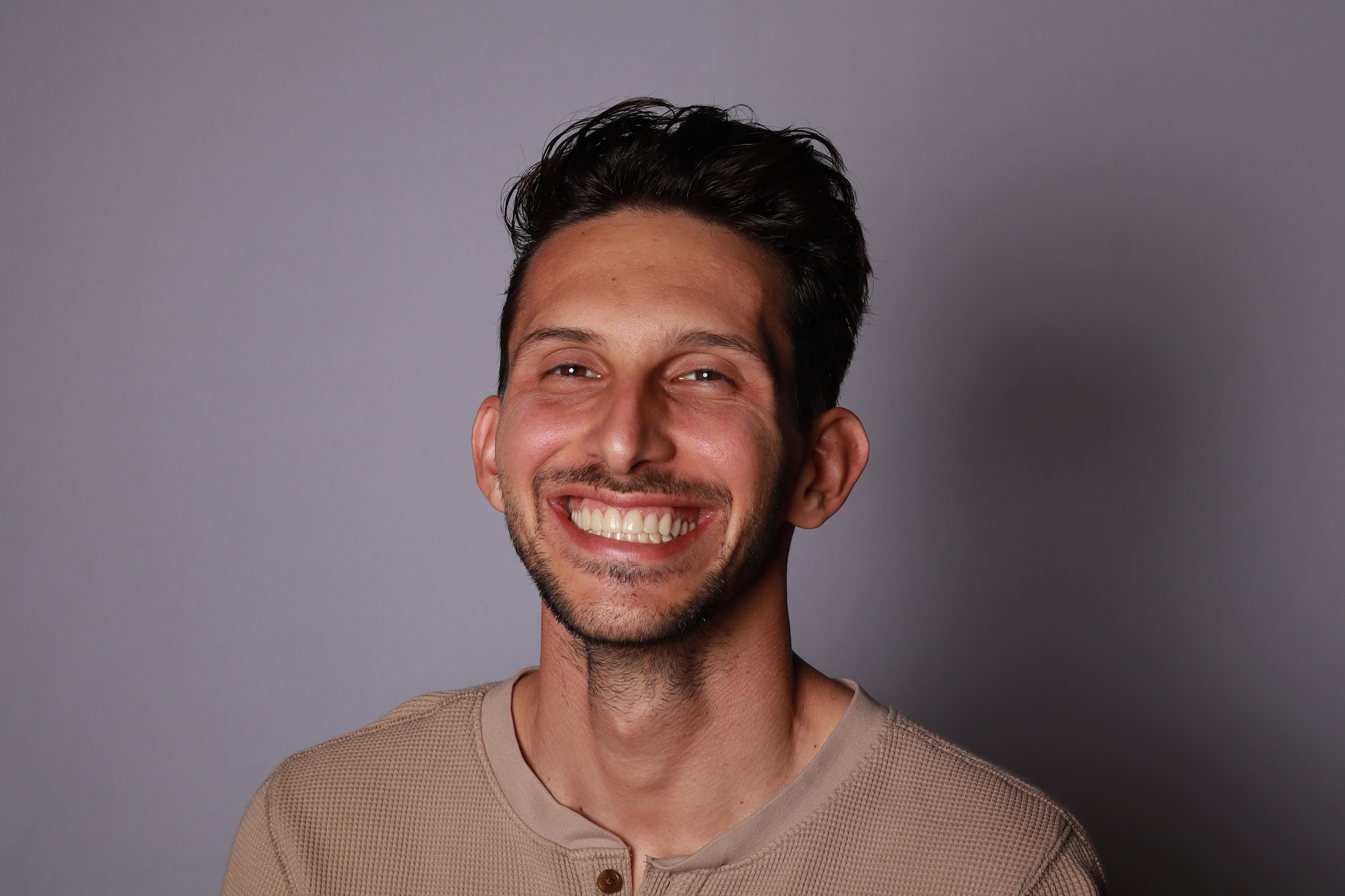
Dilan talks for a living. Men's Bible study on Tuesday mornings, fifty people in the room. Sunday services, four to five hundred. Weddings, funerals, sermons that end up on Instagram and YouTube. For a decade, he did all of it with his mouth barely open.
"I stopped smiling with my full teeth," he said, describing himself before treatment. "Soft smiles only."
Fifth grade, playing basketball, a collision that split his mouth open and took his front teeth. That's the moment Dilan traces his relationship with dentistry back to, and it wasn't a good one. "I've not, like, going to the dentist at all, and never had good experience to the dentist," he said. College made it worse. A lot of Mountain Dew, not much flossing, and years of skipped visits did what years of skipped visits do. He'll also tell you it wasn't only him: "My parents have always had teeth problems, especially my dad." Genetics loaded the gun. Habits pulled the trigger.
There were braces at some point, and a retainer he didn't wear enough, which meant some of that work drifted back. Cavities stacked up. A root canal happened somewhere along the way. By the time he was in his twenties, he had a mouth that needed more than a cleaning.
He noticed it socially before he noticed it clinically. A fraternity brother made an offhand comment about his teeth in college. "That was the first time I think I noticed people looked at my teeth," Dilan said. "Before then, I never noticed it. But then when I realized other people noticed it, I started to notice it even more." He could work out, fix his haircut, shave. Teeth felt like the one thing he couldn't fix himself.
The treatment started with orthodontics, not crowns, and there was a reason for the order. "We wanted to make sure the teeth were in a good spot," his assistant explained, "so that we don't have the risk of breaking crowns." Clear aligners ran for roughly a year to correct crowding and set up a stable bite before anything permanent went on top of it.
Dilan didn't fully see how the pieces fit together at first. "It felt very individual at the time," he said, "but now I see how it all worked together to make this." Dr. Lawnin used Digital Smile Design to map the plan and show him a mockup of the outcome before a single tooth was touched. "He was super happy, super excited," his assistant said. Once the ortho finished, treatment moved to Prime Scan digital impressions and chairside-milled temporaries, with the upper crowns prepped first and the lowers about a month later.
The final count: crowns across most of the upper arch and a good stretch of the lower arch, with his lower front teeth, the ones that show the least, left untouched. Not because they weren't part of the plan, but because they didn't need to be.
All the way through the aligner phase, his assistant tracked his progress on the dental monitoring app between visits, catching anything off-track before it became a bigger problem at the next appointment.
Going in, Dilan wasn't worried about the outcome. He was worried about the chair. "It's a long appointment," he said. "Dude, it's gonna be like six hours." Pain was the other one, even with crowns and a root canal already behind him. "I think they'll do everything they can to make me comfortable," he said, "but I think it's gonna be long."
Two things surprised him. First, the pain. "The pain was never as bad as I thought it'd be," he said. "Obviously when you're getting twenty-two teeth done, there's going to be discomfort, but overall, it was never as bad as I thought." Second, the timeline. He'd braced for something long and open-ended. Instead: "It was way quicker than I thought it would be."
His assistant remembers the moment the final crowns went on. "He was just kind of taken aback," she said. "Like, wow, this can be me."
Ask Dilan to describe his smile before treatment and he lands on the same three words every time: soft smiles only. Ask him now, and it's "bold, big, and joyful."
He performed a wedding homily in Galveston not long after finishing. Afterward, an older guest walked up and told him she loved his smile. Didn't mention the homily. People from his church who'd never spoken to him before started stopping him to say the same thing. He notices he brushes and takes care of his teeth differently now too. "Before, I felt like they were an afterthought," he said. "Now that I've been blessed with this, I've gotta keep up with it."
He's also stopped filtering himself mid-sentence. "I don't have second thoughts about, does my smile look bad, or people judging me," he said. "I just smile and don't really care."
"It's a huge investment," Dilan said, "and I was worried about the time and money and all that stuff. That's all real. But I am so glad I got it done, and I feel like this sets me up for success down the road." His advice to anyone else on the fence: don't sit on it. "Just do it, as long as you have a dentist you trust." He compares it to the way people talk about mechanics: told something's wrong, no real way to check it yourself, so it comes down to whether you trust the person telling you. "That's why it's so important to find a dentist you can relate to and know has your best interest in mind."
For Dilan, that trust started with a friendship and ended up rewriting a fear that had followed him since fifth grade. "This whole process has been like redeeming the dentist for me a little bit," he said.
Whether you're looking to enhance your smile or simply maintain lifelong oral health, we’re here to guide you with expert care and honest conversations.

Clear, honest answers to the dental questions you’ve been wondering about, because understanding your care shouldn’t be complicated.

.jpeg)