.png)

If you've had a crown before, there's a good chance it went like this: one appointment to prep the tooth, a temporary crown to wear for a few weeks, and a second appointment to fit the permanent one once it came back from the lab. That's the standard workflow at most dental offices, and it's worth understanding why, because it explains a lot about why crowns sometimes don't go smoothly.
In that traditional process, once your dentist preps your tooth and takes an impression, the actual crown gets designed and made by a lab technician who has never seen you. They're working from a written instruction: tooth number, shade, done. There's minimal back-and-forth between the dentist and the person actually building the crown. If something is slightly off, the color doesn't quite match, the fit isn't right, that usually doesn't surface until your second appointment weeks later, when the crown comes back and gets tried on for the first time.
When that happens, fixing it takes real time. What could have been caught in five minutes at the design stage instead becomes another cycle back to the lab, another wait, another appointment.
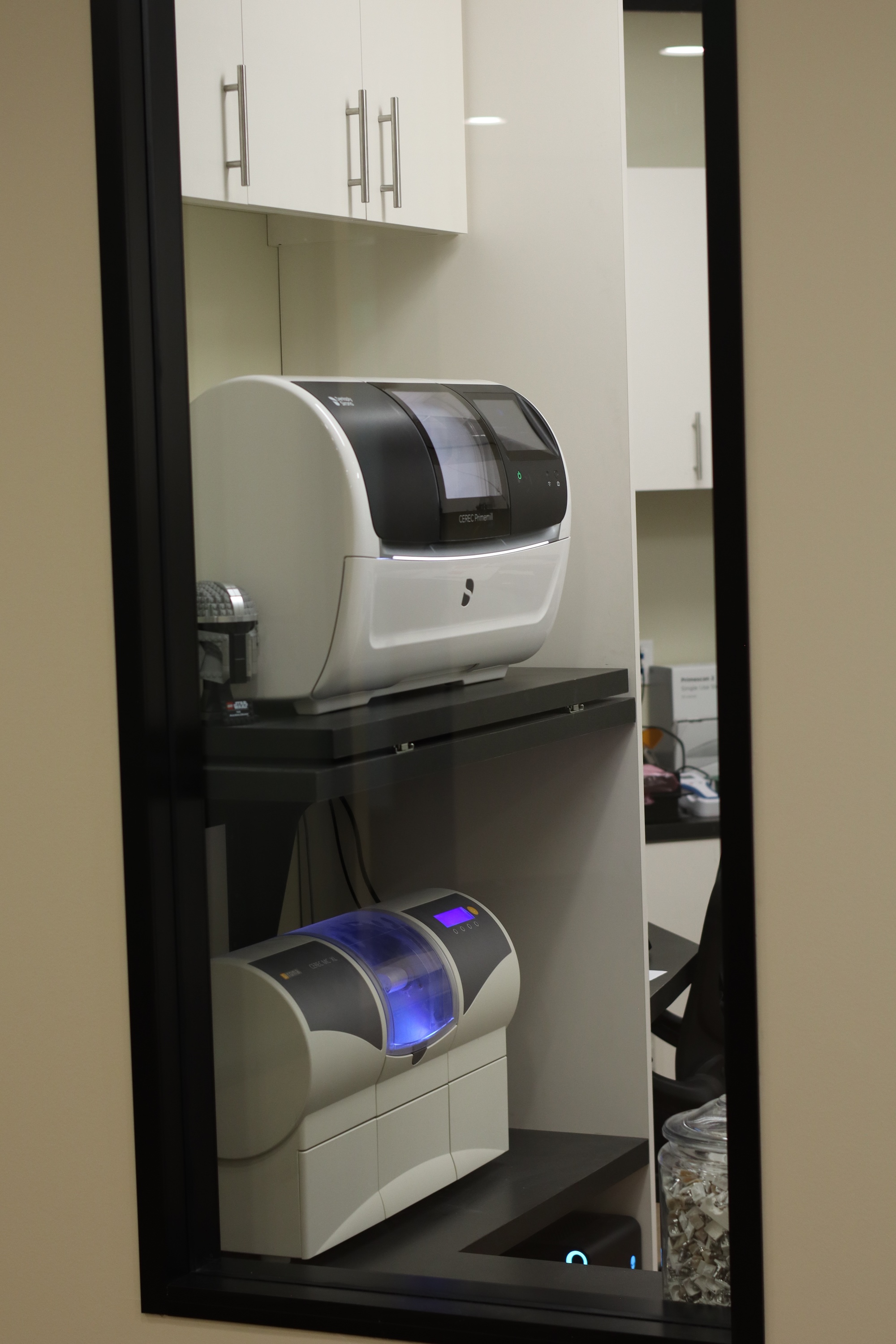
We handle this differently because we have our own in-house digital lab, and the dentist treating you designs and approves every crown personally. There's no note handed off to a stranger. Digital scans replace the traditional impression, and the crown is designed, milled, and placed in a single visit. If the shade needs adjusting or the fit needs refining, that happens immediately, not three weeks from now.
This also changes what happens after the crown is placed. The most common post-crown complication is a bite that isn't quite right, which usually shows up as ongoing sensitivity or the need for a follow-up adjustment. Because the same dentist who examined your bite in person is the one designing the crown digitally, that mismatch is far less common to begin with. The software can even flag things like a sharp point on the opposing tooth, something that could crack a new crown down the line, and let us smooth it out before the crown is ever manufactured. That's a detail an offsite lab has no way of catching.
None of this means crowns are risk-free or perfectly predictable. They're a small surgical procedure, and normal post-operative sensitivity or soreness is still part of the process either way. But controlling the entire workflow, from prep to design to fabrication, means most of what can go wrong gets caught and corrected before you ever leave the chair, not weeks later.
Whether you're looking to enhance your smile or simply maintain lifelong oral health, we’re here to guide you with expert care and honest conversations.

Clear, honest answers to the dental questions you’ve been wondering about, because understanding your care shouldn’t be complicated.


.jpeg)