.png)

.webp)
Demi Moore's smile is a great example of why cosmetic dentistry is art as much as science. At first glance, the teeth are positioned well. The gum shaping looks natural. The outline of the smile is strong. But Dr. Lawnin still rated the smile lower because the details inside the teeth did not feel natural enough.
That is something many patients never think about before getting veneers. They know they want straighter, whiter teeth. They may know they want a better smile shape. But they often do not realize that surface texture, translucency, and tiny imperfections are what keep veneers from looking fake.
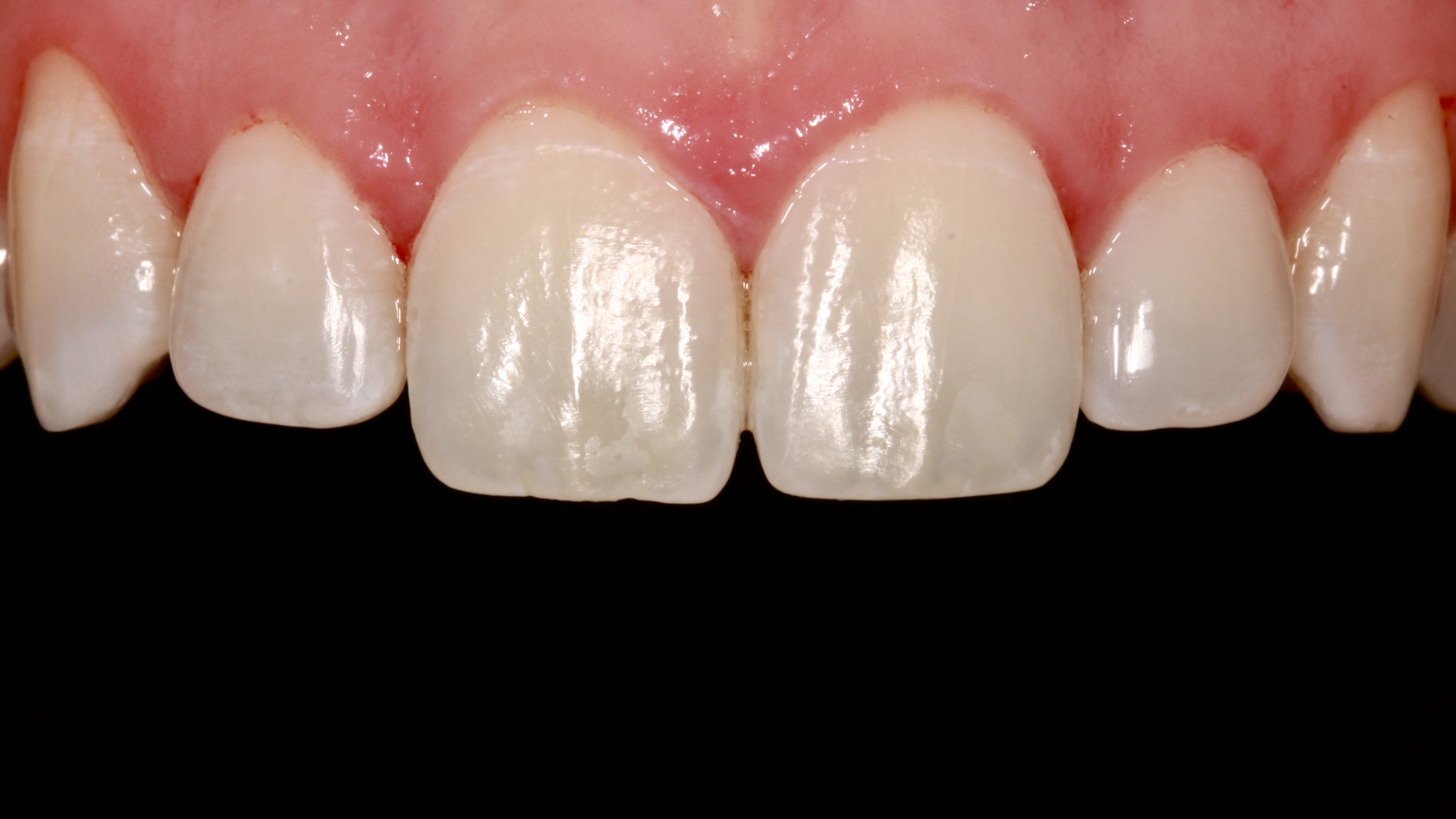
Real enamel is not completely flat. It has subtle texture. It reflects light differently across different areas of the tooth. It may have faint ridges, surface variations, and translucent edges. These details are easy to miss when you are looking from across the room, but they make a huge difference in whether teeth look alive.
When veneers are too smooth, too reflective, or too uniform, they can look artificial. The teeth may be beautiful in a simplified way, but they can lack the depth that makes natural teeth believable.
Dr. Lawnin pointed out that Demi Moore's smile had nice line angles. Line angles are the subtle edges and light-reflecting zones that shape how wide or narrow a tooth appears. They help create dimension. They are one reason two veneers made from the same material can look completely different.
A skilled cosmetic dentist and ceramist use line angles to create a more natural appearance. They can make a tooth look softer, stronger, more feminine, more masculine, younger, more mature, wider, or narrower without simply changing the actual tooth width.
The transcript also criticized the shade as being too bright. This matters because natural teeth are not one solid color. Even very white natural teeth have depth. The color changes subtly from the gumline to the edge. The edge may look slightly translucent. The surface may have warmth or variation.
When all the teeth are one uniform color, the smile can look flat. It may photograph brightly, but it can look less natural in person.
Dr. Lawnin compared this kind of smile to a painting. From a distance, the framing may be beautiful. The composition may work. But when you get close, the brushstrokes matter. If the brushstrokes are missing or too uniform, the art loses depth.
That is exactly how veneers work. The overall smile design matters, but the micro-detail matters too. The tooth shape, gum outline, surface texture, translucency, edge detail, and light reflection all contribute to the final result.
If you are considering veneers, ask your dentist how they create natural texture. Ask who makes the veneers. Ask whether the lab customizes translucency, line angles, and surface anatomy. Ask whether you will see a mock-up before the final ceramics are made.
A great veneer case should not look like twelve identical white tiles. It should look like a naturally beautiful smile that fits your face.
Demi Moore's smile shows that good positioning and pretty gum contours are not enough by themselves. Natural-looking veneers need detail. They need texture. They need light movement. They need the little imperfections that make teeth feel real.
If you want veneers that look refined instead of fake, focus less on choosing the whitest shade and more on choosing the process, dentist, and lab capable of creating natural detail.
Want veneers that look natural up close, not just bright from far away? Schedule a digital smile design consultation with Tanglewood Dental Associates.
Whether you're looking to enhance your smile or simply maintain lifelong oral health, we’re here to guide you with expert care and honest conversations.

Clear, honest answers to the dental questions you’ve been wondering about, because understanding your care shouldn’t be complicated.

.jpg)