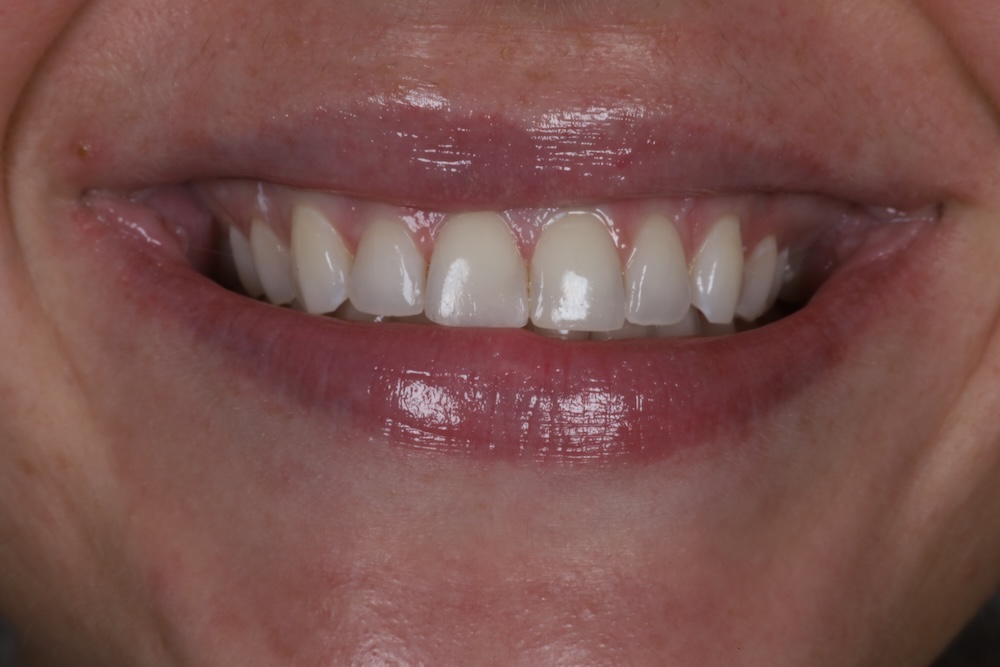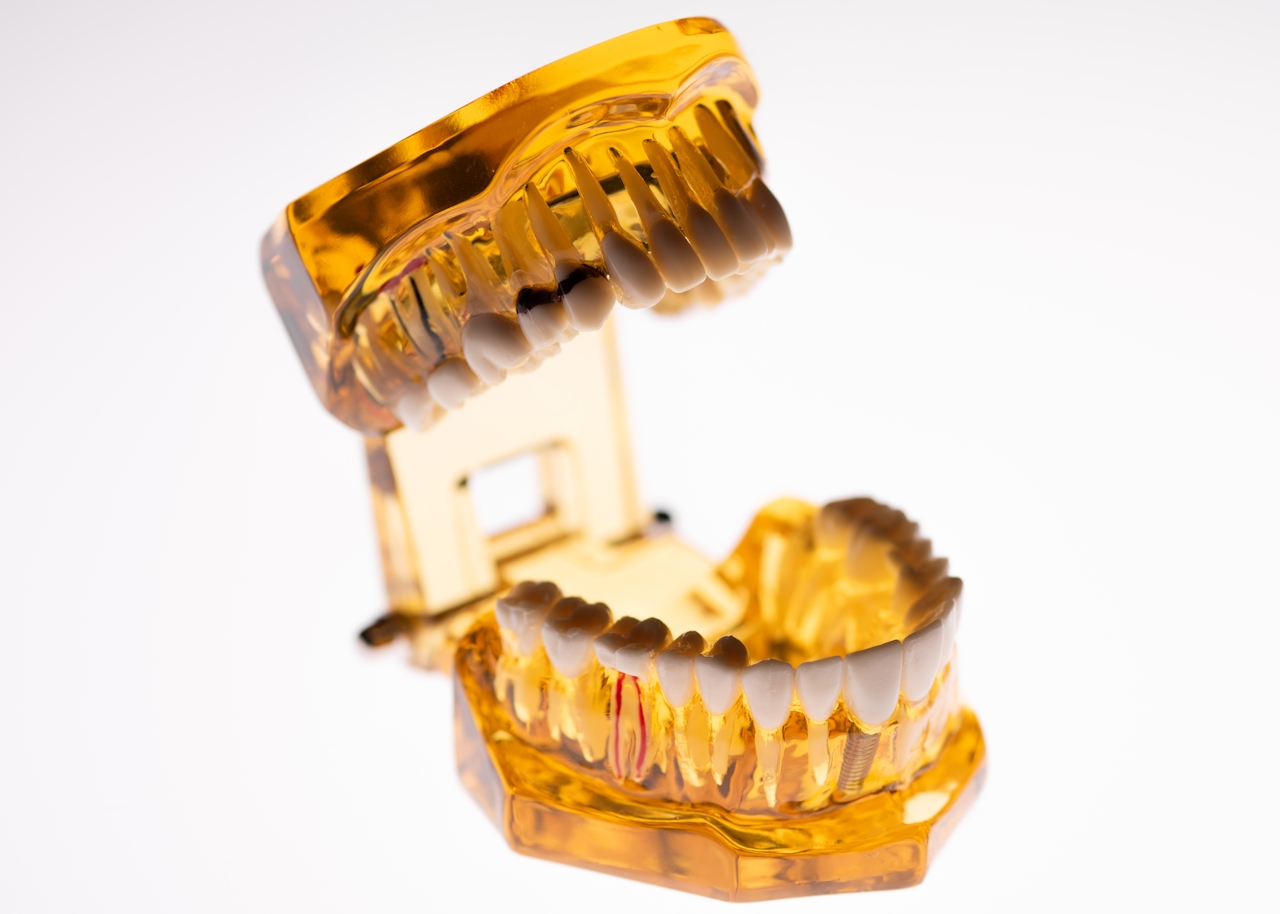
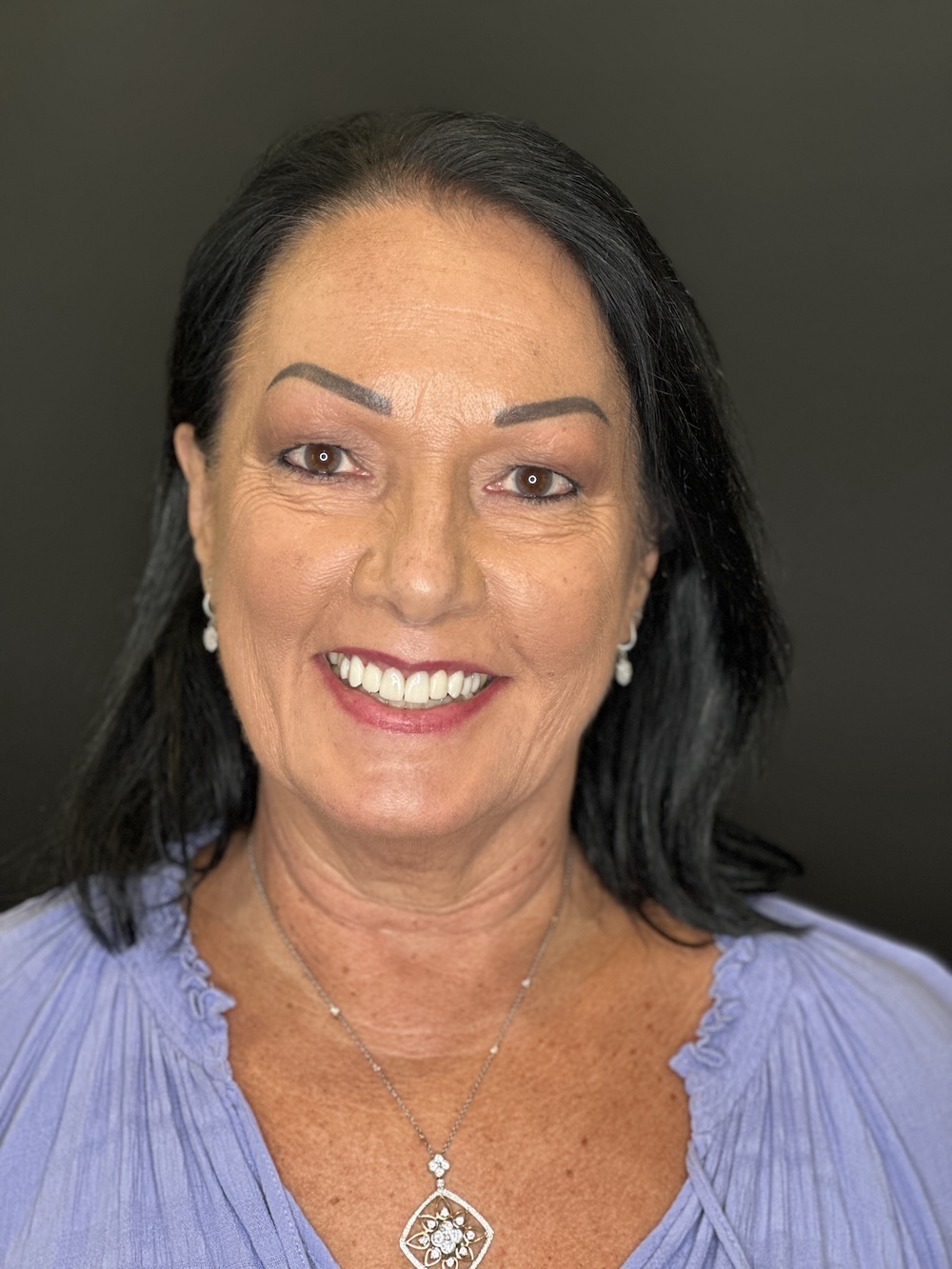
Patty came to us after breaking off one of her upper front teeth, a lateral incisor beside her two center teeth. The tooth couldn't be saved. It was removed, and an oral surgeon placed a dental implant. That could have been the whole story: a missing tooth replaced, and everything else left as it was.
Patty had never liked the rest of her smile, though.
Several of her front teeth already had older porcelain-fused-to-metal crowns. They did their job, but they looked blocky and square, and nothing like natural teeth. Patty didn't want a "perfect" Hollywood smile. She wanted teeth that looked like hers.
An implant needs a few months to fuse with the bone before the final tooth goes on. During that time, Dr. Lawnin raised a question with Patty: since we're making a new front tooth anyway, is there anything else you'd want to change? If the new implant crown had been matched to her old blocky crowns, she'd have locked in a look she never liked.
While the implant healed, we built a Digital Smile Design plan for her upper teeth. It started with a "smile frame," the ideal size, shape and position of each tooth for Patty's face.
Then Patty got to test-drive it. We made a mockup she could see in her own mouth, she gave feedback, and we made small adjustments until she was happy with it.
With the design approved, the plan came together tooth by tooth:
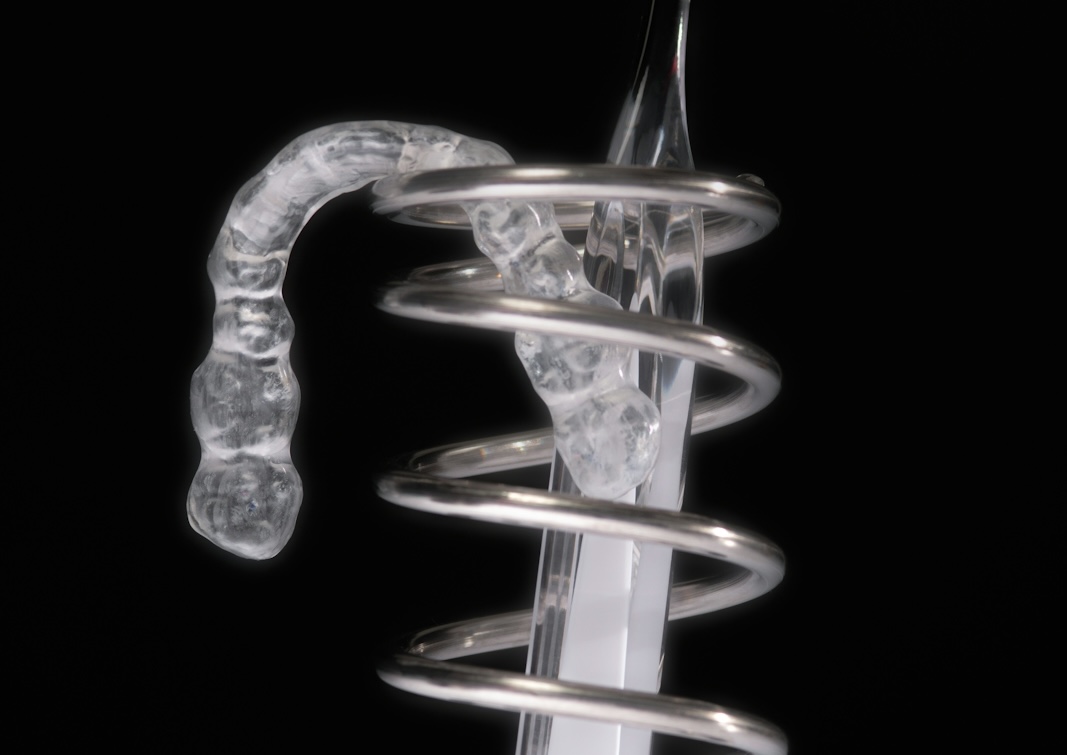
Dr. Lawnin used guides made from the approved design to remove only as much tooth as each restoration needed. Then everything was made to match the plan.
The biggest change was in the details. Dr. Lawnin opened up the small notches between her front teeth (the embrasures) and added natural shape and surface detail. That's what separates teeth that look real from the flat, boxy look of her old crowns. Patty asked for natural, not perfect, and that's what the design aimed for.
Patty's been thrilled with how it turned out. A tooth she lost by accident became the start of a smile that finally looks like her own.
Often, yes. The healing period is a good time to plan, because the new implant crown and any other restorations can be designed together to match.
Older porcelain-fused-to-metal crowns were often made thick and uniform, with little of the shape and detail natural teeth have.
Yes, when they're planned together from one design, like Patty's were.
If you're facing an implant or a new crown on a front tooth, it's worth asking what else you'd change while you're at it. Wouldn't you rather plan it once and get the whole smile right?
Whether you're looking to enhance your smile or simply maintain lifelong oral health, we’re here to guide you with expert care and honest conversations.

Clear, honest answers to the dental questions you’ve been wondering about, because understanding your care shouldn’t be complicated.