.png)

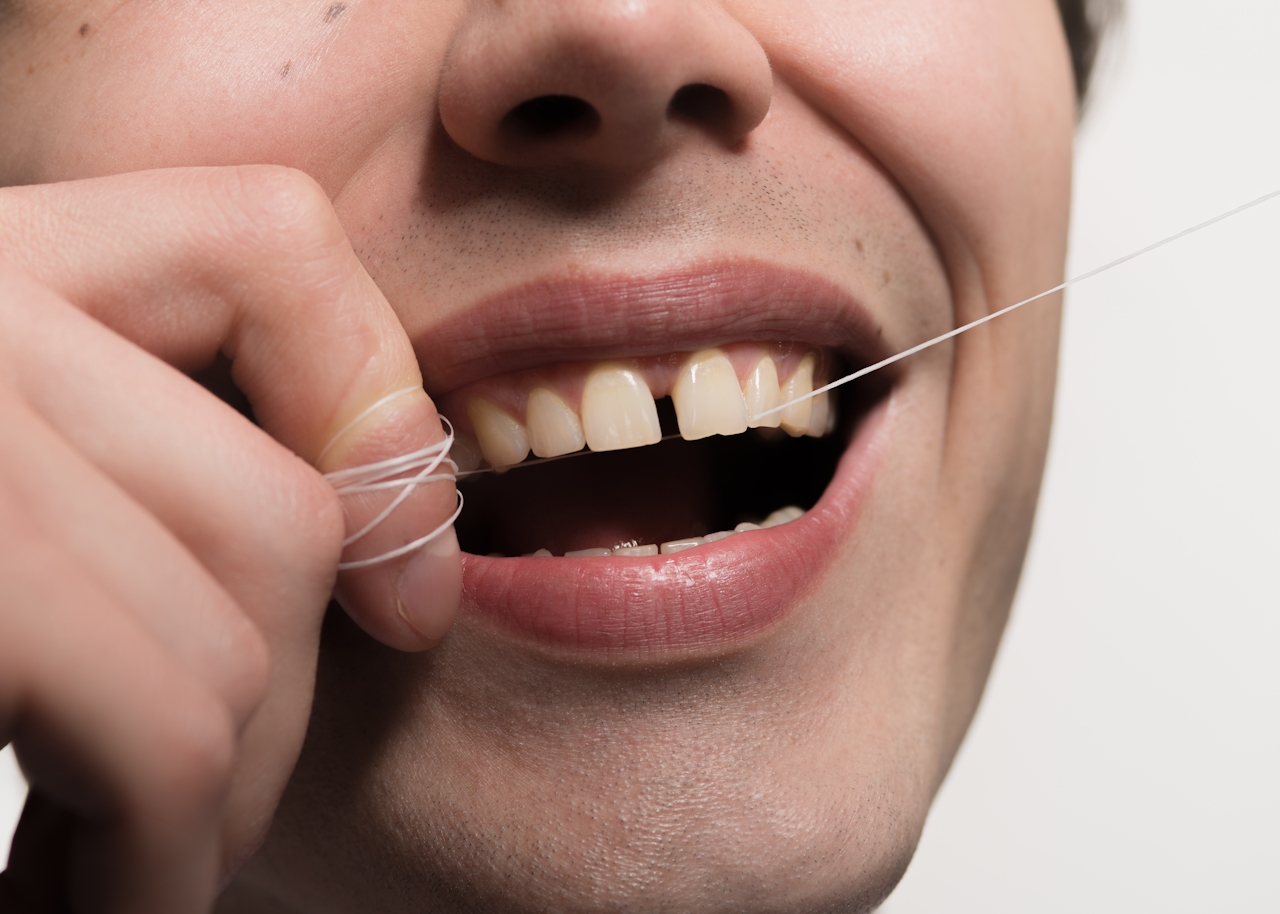
Most people think the hard part is remembering to floss. But for many patients, the bigger issue is not whether they floss. It is how they floss.
If you are moving quickly from tooth to tooth and simply snapping the floss down and back up, you may be missing the entire point of the habit. That quick “pop, pop, pop” motion can get floss between the teeth, but it does not necessarily clean the surfaces where buildup collects.
Floss is not just meant to pass through the contact between two teeth. It is meant to work like a small scraping tool.
A lot of people floss by pressing the floss between two teeth, pulling it up, and moving on. It feels like the job is done because the floss went between the teeth.
But that motion alone may not remove the plaque and debris sitting along the sides of the teeth.
Think about the way your teeth can feel after a long road trip, a busy workday, or a day when you have been snacking and sipping on the go. They can start to feel gritty or grimy. That feeling comes from buildup on the tooth surface.
When food particles and plaque collect between the teeth, floss can help remove them. But it only works well when the floss is actually rubbing against the tooth.
The goal of flossing is not just to get floss through the space between teeth. The goal is to clean the sides of the teeth where your toothbrush cannot reach well.
That means the floss should gently wrap around the side of one tooth and move up and down against that surface. Then it should do the same thing on the neighboring tooth.
If you only snap the floss straight down and pull it straight back out, you may leave buildup behind. The floss has touched the space, but it has not done the cleaning motion it was designed to do.
Plaque and food debris do not become a problem all at once. The issue is what happens when buildup sits for too long.
When plaque remains between the teeth, bacteria can contribute to cavities and gum inflammation. Over time, poor cleaning between the teeth may increase the risk of tooth decay or gum disease.
That is why someone can honestly say, “But I floss,” and still be frustrated by cavities, bleeding gums, or recurring issues between the teeth. In some cases, the problem is not a lack of effort. It is technique.
Good flossing does not need to be aggressive. It should be controlled, gentle, and intentional.
Start by guiding the floss carefully between the teeth. Avoid forcing or snapping it into the gums. Once the floss is between the teeth, curve it around one tooth in a C-shape. Then move it up and down along the side of that tooth, scraping the surface gently.
After that, shift the floss to the other side of the same space and repeat the motion on the neighboring tooth. Each space between your teeth has two tooth surfaces that need attention.
A simple way to remember it:
If you are getting cavities between your teeth or noticing signs of gum disease even though you floss, it may be time to have your dentist or hygienist watch your technique.
This is not about blame. It is about making the habit work better.
Many patients were never shown how to floss in a way that actually cleans the tooth surface. A small adjustment can make the routine more effective and help you feel more confident that your daily effort is paying off.
Flossing is a valuable habit, but only when the floss is used correctly. The goal is not speed. The goal is contact with the tooth surface.
So the next time you floss, slow down. Do not just pop the floss between your teeth and move on. Scrape the sides of the teeth gently and intentionally.
That is where the cleaning happens.
Whether you're looking to enhance your smile or simply maintain lifelong oral health, we’re here to guide you with expert care and honest conversations.

Clear, honest answers to the dental questions you’ve been wondering about, because understanding your care shouldn’t be complicated.
_Nick_Fancher_Photos_ID3467.jpg)