"Can't I just use my retainer as a night guard?" At Tanglewood Dental Associates, this is one of the most common questions we hear from patients looking to protect their teeth from grinding. While both devices may look similar at first glance, night guards and retainers serve distinctly different purposes in maintaining your oral health. Understanding these differences isn't just about knowing which device to choose – it's about ensuring you're getting the right protection for your specific needs.
Although both devices are custom-made for your mouth, a night guard is like a protective cushion that distributes bite pressure evenly across your teeth, while a retainer is more like an anchor, holding your teeth in their proper position. Some patients actually benefit from using both devices, each serving its unique purpose in protecting their oral health.
In this guide, we'll explore the key differences between night guards and retainers and help you understand:
A night guard is specifically designed to protect your teeth and jaw from the effects of grinding and clenching. What makes a night guard unique is its smooth surface design across the bottom, which helps distribute bite pressure evenly across all your teeth. Think of it like a protective cushion that creates a barrier between your upper and lower teeth.
"A night guard levels out the bite across all teeth," explains our dental team. "If you look at the bottom of a night guard, it's smooth all the way across, unlike a retainer which has every little groove and cusp that your teeth do."
Typically, we recommend wearing a night guard on just one arch – usually the upper teeth. This design choice is intentional and based on years of clinical experience. When placed on the bottom teeth, patients often find their tongue interferes more with the device.
In contrast, retainers serve a completely different purpose. They're designed to maintain the position of your teeth after orthodontic treatment. A retainer precisely matches the structure of your teeth, including all the small grooves and contours. This exact fit is crucial because its job is to hold – or retain – your teeth in their correct positions.
"A retainer is usually used after orthodontics, and that's just used to keep the teeth in place," our team notes. "It's not moving anything back because that requires ortho, like Invisalign or braces."
One of the most crucial points we emphasize to our patients is that these devices cannot substitute for each other. A retainer cannot provide the protective benefits of a night guard because it lacks the specific design features that help distribute bite pressure and protect against grinding.
When it comes to wearing either a night guard or retainer, comfort plays a crucial role in patient compliance. At Tanglewood Dental Associates, we're transparent with our patients about what to expect with each device.
Night guards are typically thicker than retainers, which can take some getting used to. "A night guard is quite a bit thicker," our dental team explains. "We definitely have more complaints of people not being compliant with wearing a night guard than with retainers."
Some patients initially report:
However, these initial adjustments usually improve with time and proper fitting. We take extra care during the fitting process to ensure your night guard is as comfortable as possible while still providing the necessary protection.
Retainers generally have a higher compliance rate, largely due to their thinner profile and exact fit to your teeth. Since they're designed to maintain tooth position rather than provide protective cushioning, they can be made with a slimmer profile while still serving their purpose effectively.
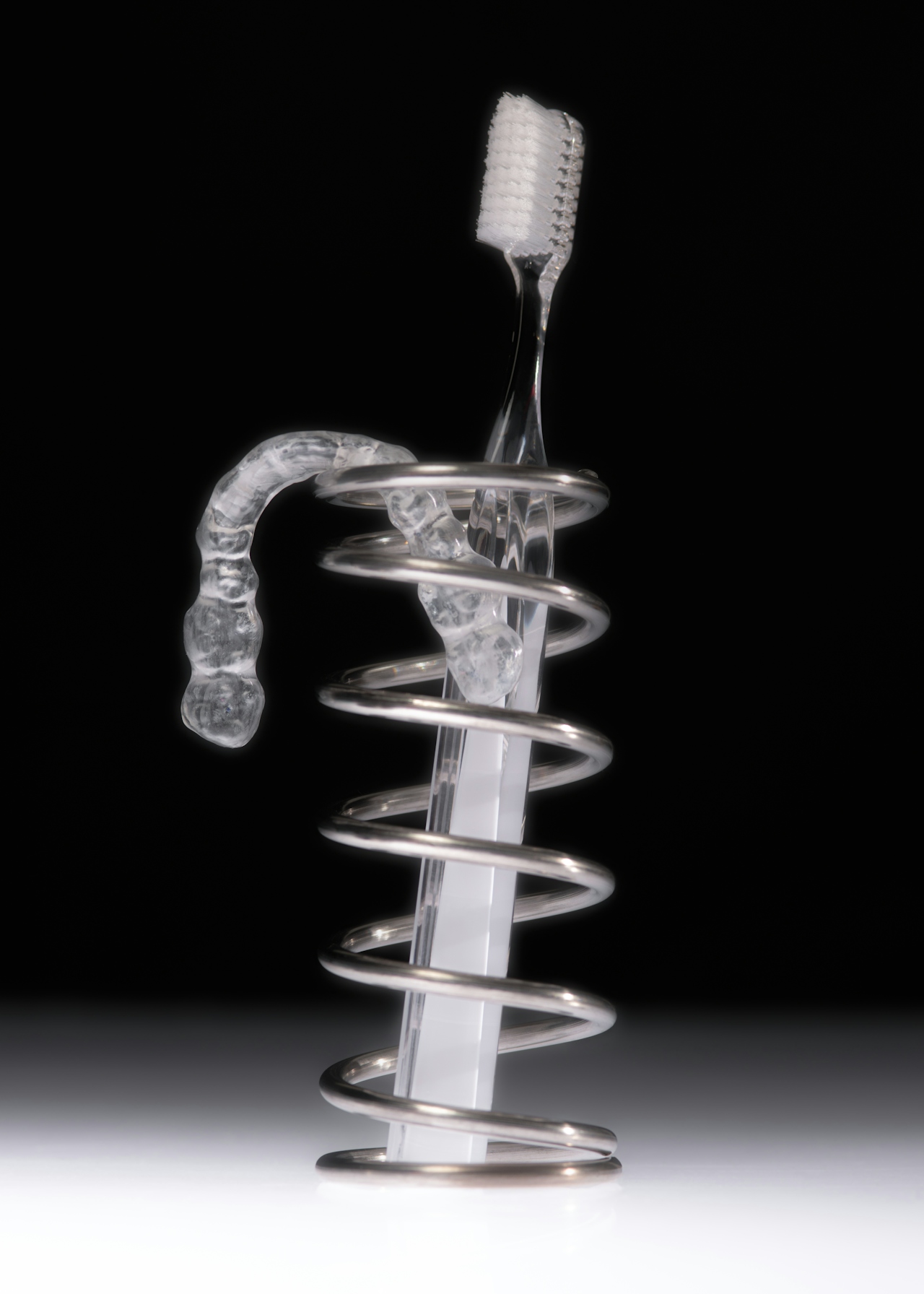
In some cases, patients may need both a night guard and a retainer. "I wear both because I want to hold my teeth in place," shares one of our dental professionals. In these situations, we typically recommend wearing a night guard on one arch and a retainer on the other, creating a comprehensive solution for both protection and position maintenance.
Proper care of your night guard or retainer is essential for both the longevity of the device and your oral health. At Tanglewood Dental Associates, we provide clear guidelines for maintaining these important dental investments.
For both night guards and retainers, we recommend:
"We recommend brushing them every day, like every morning when they're taken out," our team advises. "And then typically, at least a couple times a week, make like a baking soda water paste and just brush it really good."
Bring your device to regular dental visits for professional cleaning in our ultrasonic solution. This deep cleaning helps maintain the device's integrity and ensures optimal hygiene.
It's important to note what not to do when cleaning your devices:
Regular maintenance not only extends the life of your device but also ensures it continues to function effectively for your specific needs.
Understanding the financial aspects of night guards and retainers can help you plan for these important dental investments. At Tanglewood Dental Associates, we believe in transparency when it comes to discussing costs and insurance coverage.
Night guards typically represent a higher initial investment compared to retainers. However, this cost difference reflects their specialized design and protective function. Insurance coverage for night guards varies:
Retainers generally come at a lower price point than night guards. However, there are some important considerations:
When evaluating the cost of either device, consider:
Understanding the differences between night guards and retainers is crucial for protecting your oral health investment. As we've discussed, while these devices may look similar, they serve distinct purposes – night guards protect against grinding and distribute bite pressure, while retainers maintain tooth positioning after orthodontic treatment. Neither can effectively substitute for the other, and some patients may benefit from using both.
At Tanglewood Dental Associates, we're committed to helping you make informed decisions about your dental health. If you're experiencing symptoms of teeth grinding, such as jaw pain or wear on your teeth, we recommend scheduling a consultation to discuss whether a night guard might be right for you. Similarly, if you've recently completed orthodontic treatment, we'll help ensure you have the proper retainer to maintain your results.
Remember, investing in the right dental device – and caring for it properly – is an investment in your long-term oral health. We're here to guide you every step of the way, ensuring you get the protection and results you need.
Questions about which device might be right for you? Contact our office to schedule an evaluation. Your comfort and long-term oral health are our top priorities at Tanglewood Dental Associates.
Whether you're looking to enhance your smile or simply maintain lifelong oral health, we’re here to guide you with expert care and honest conversations.

Clear, honest answers to the dental questions you’ve been wondering about, because understanding your care shouldn’t be complicated.